130km from Melbourne, Phillip Island is a wildlife lover’s dream. On Sunday, after enjoying the complimentary breakfast at the hostel and going to church, I joined a tour there and thoroughly enjoyed ticking off some more of Australia’s animal A-listers!
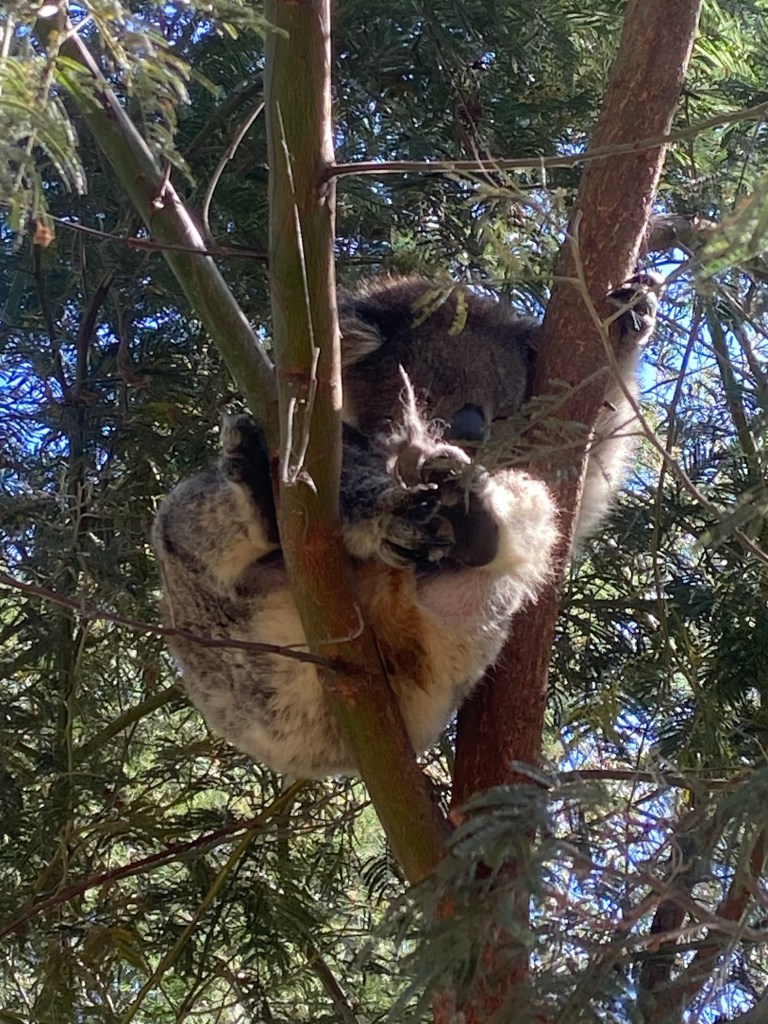
After braving the holiday traffic, our first port of call on the island was the Koala Conservation Reserve. Though not native to the island, these iconic animals have a healthy population there and throughout Victoria, unlike in other states, where the devastating forest fires of 2019 took a heavy toll on their numbers.
The word koala comes from an aboriginal word meaning “no drink”, as their only water source, and indeed food source, is gum tree (eucalyptus) leaves. These only give them sufficient energy for activity a couple of hours a day, so they spend much of the time asleep and wedged snugly between gum tree branches.
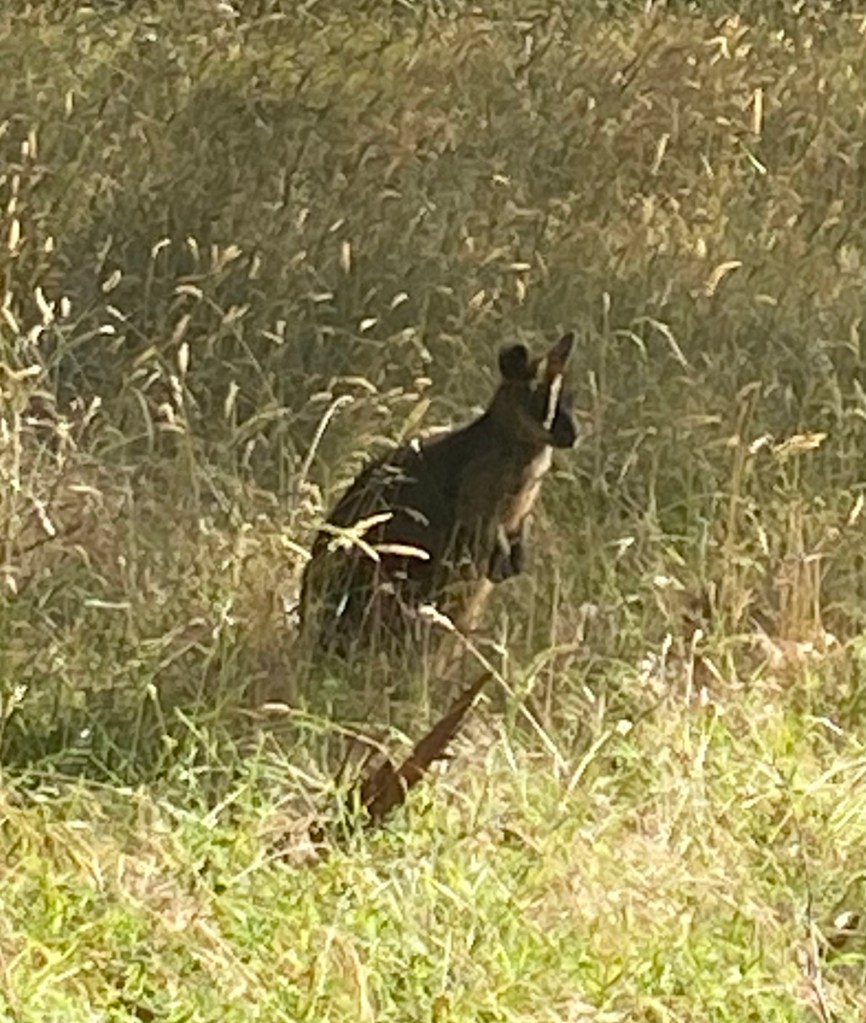
Phillip Island also has a large population of another favourite marsupial, the wallaby. Smaller than kangaroos, they hop around much like their cousins and we saw several in the wild as we drove around the island.
At the Reserve, we were also on the look-out for echidnas, but to no avail. Whilst driving we were treated to a roadside encounter with one though:
These fascinating animals are only found in Australia and New Guinea, and alongside their nearest relative, the platypus, are the only egg-laying mammals (monotremes) in the world. They are covered by quills, but, despite appearances, are only distantly related to hedgehogs.
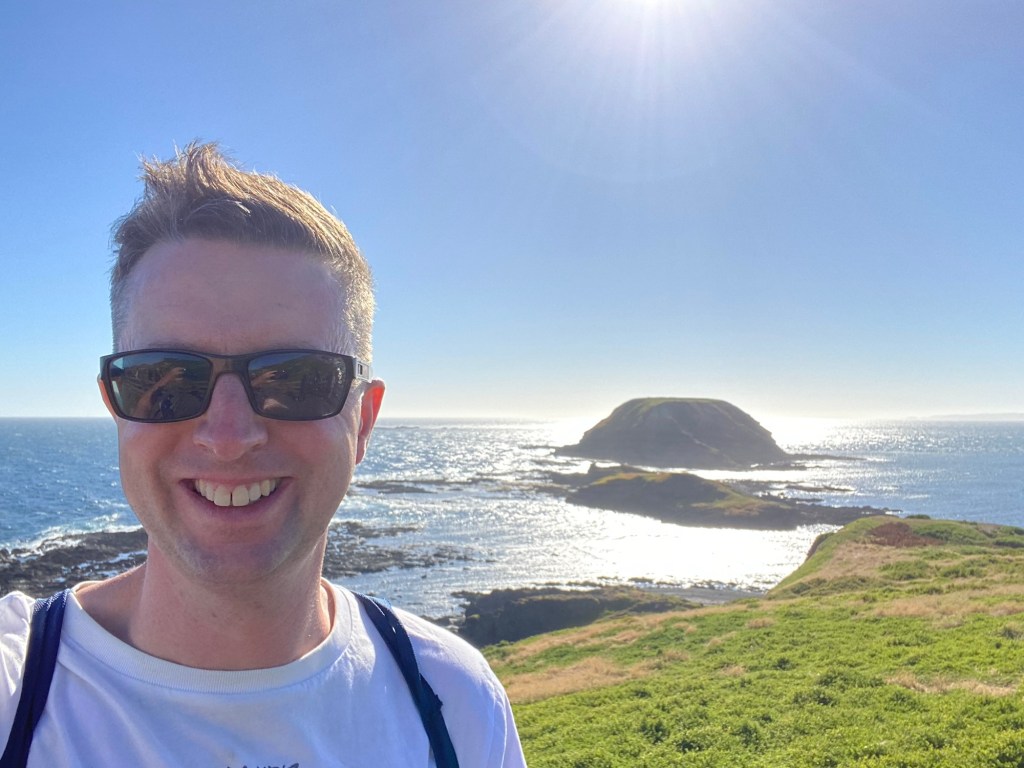
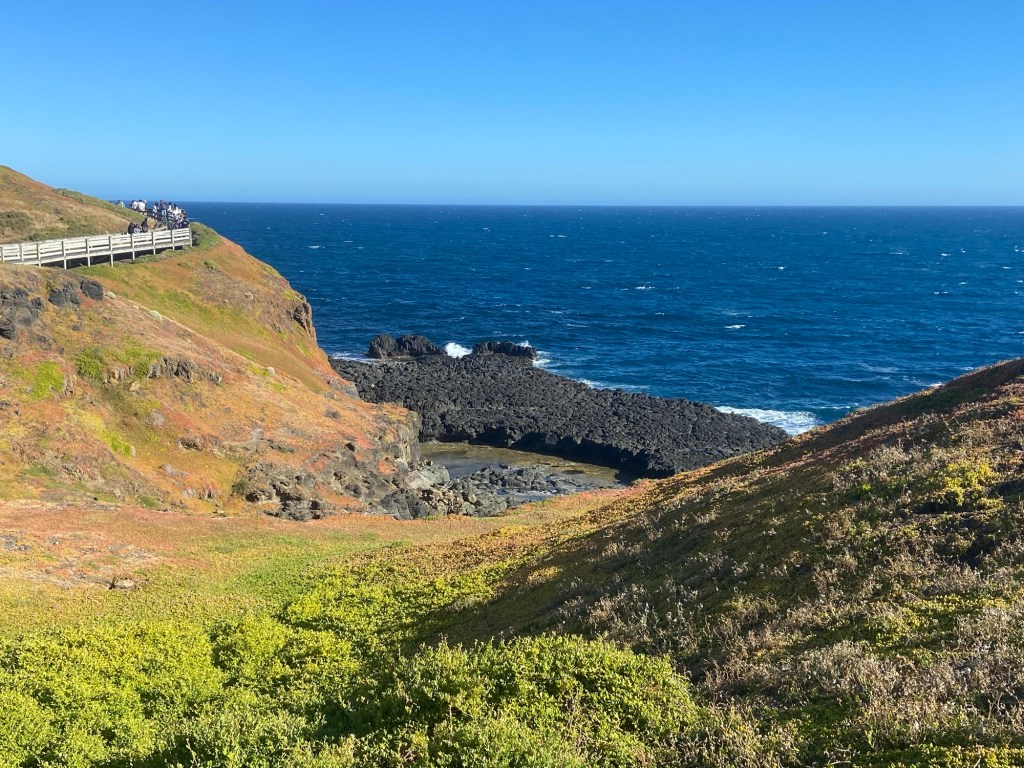
From the Reserve, we headed to the peninsula at the furthest end of the island, which culminates in rocky outcrops known as The Nobbies. A boardwalk affords views of the stunning coastline, which looked particularly majestic in the evening sunshine.


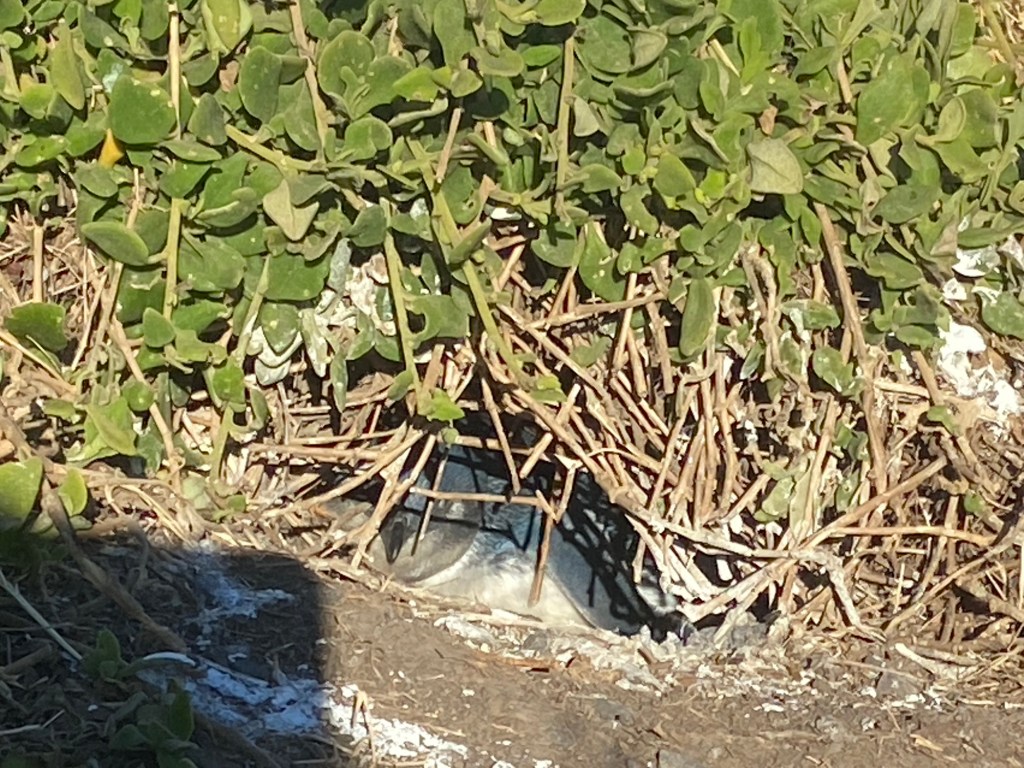
Phillip Island’s best known resident is the Little Penguin, and the Nobbies Peninsula is home to many of their burrows. Having not seen any from the boardwalk, I wandered down the road a little way and was excited to stumble across this little fellow!
Phillip Island’s most famous spectacle is the nightly Penguin Parade. Most evenings, just after dusk, a couple of thousand Little Penguins emerge from the waters at Summerland Bay, socialise and waddle chaotically to their burrows. It is a remarkable sight to behold, and ticketed seating has been installed to view it:

Waiting for the Parade at the visitor centre, with fish and chips and a glass of wine, felt a bit like the preamble to a West End show. When the performance finally began, the cast put on a stellar performance (quite literally, under a starlit sky).
There is something very endearing about these flightless birds. Maybe that’s because it is easy to anthropomorphise them with their upright stance. Maybe it’s due to how clumsy they are as they stumble their way over the rocks. Maybe it’s the enthusiasm of the chicks as they approach every passing adult in the hope they’ve found a parent (parents are able to recognise their young but not vice versa)…
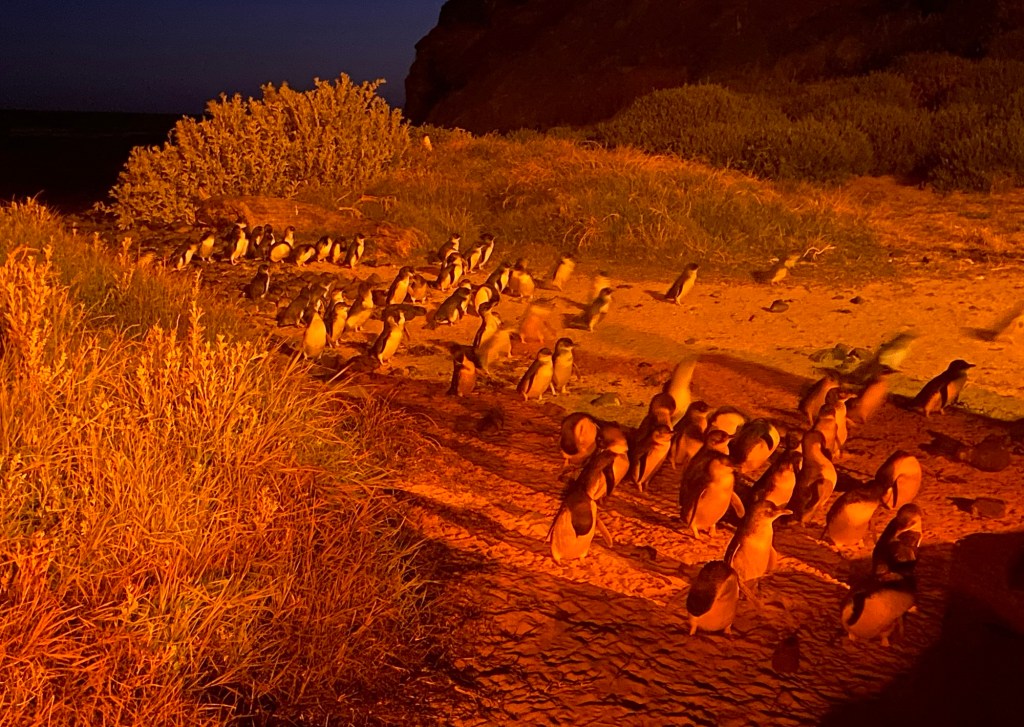
Whatever the reason, I was transfixed by them and lost track of time, almost missing the bus (most unlike me…).
Phillip Island is a real conservation success. Penguin numbers were plummeting with heavy development on the Nobbies Peninsula, but over several decades the whole area has been rewilded and the penguin colony is healthy again.
As on other tours, another highlight of this one was meeting fellow group members. I was paired with the other solo traveller, a girl from Buenos Aires, on the bus, so we had plenty to discuss! And there was yet another WBGS alumnus, although not one I’d taught this time.
We got back to Melbourne at midnight and I settled down for a short night ahead of my next tour, which was due to depart the next morning at 6:45am!
 Around the World in 70 Days
Leave a comment